 Pace
How to plan a career break
Start with the money you can use, costs that continue and the period until pay returns. Build a budget, test it, then explore the wider outlook.
Start with the question you need to answer.
The amount in your savings account is only a starting point. Money you keep untouched cannot also fund the break. And the day you return to work may come before your first paycheck. Start with your question, then check the costs and dates behind the answer.
Look at three things first.
- Money you can use. Include the wealth you actually plan to draw from.
- Costs that continue. Include living costs, debt payments and any extra costs during the break.
- Income that continues. Pausing one source does not have to mean losing every source.
A comparison gives you context. It cannot know when a new paycheck will arrive or what unexpected costs you might face.
Separate the break budget from your reserve.
A planned pause and an unexpected expense need different money. Choose an amount to leave untouched, then work out what the break itself would use. Include debt payments once in monthly spending. Put costs due at the start, such as travel or training, in a separate upfront amount.
For example, six months at 2,500 in spending and 500 in continuing monthly income use 12,000 from savings. With 1,000 upfront and 6,000 left aside, the starting target is 19,000. This example assumes fixed amounts, no growth and no inflation. It does not account for bills arriving before income.
Calculate a career-break budget with your own reserve. Try a longer break or lower continuing income to see how the target changes.
Check annual bills against actual records. The CFPB spending checklist covers less frequent expenses that a single month can miss. Check employer arrangements and insurance costs separately; this budget does not calculate tax or benefit entitlements.
Budget until your next paycheck, not just your return date.
Your return date and the first new deposit are different milestones. Confirm final salary and payroll arrangements, then test any additional period you may need to fund. A date is an assumption, not a hiring forecast.
Build and print a return-to-paycheck timeline. Then check all the months you may need to fund, or see how many full months your savings could cover.
A typical month can miss an expensive bill.
Check recent records for payments that arrive less often: insurance, repairs, family support or renewals. Separate regular monthly costs from known extra payments. A bill of 1,200 due near the start needs 1,200 available then; its average of 100 a month does not postpone the payment.
Count each cost once, and check actual due dates separately from the monthly estimate. Include known upfront bills in your break budget without also including them in monthly living costs.
Try the break before you commit.
Choose Take a sabbatical in Pace, set the dates and enter the income that would pause. Compare the result with your current outlook. Try a different length or spending amount to see what changes.
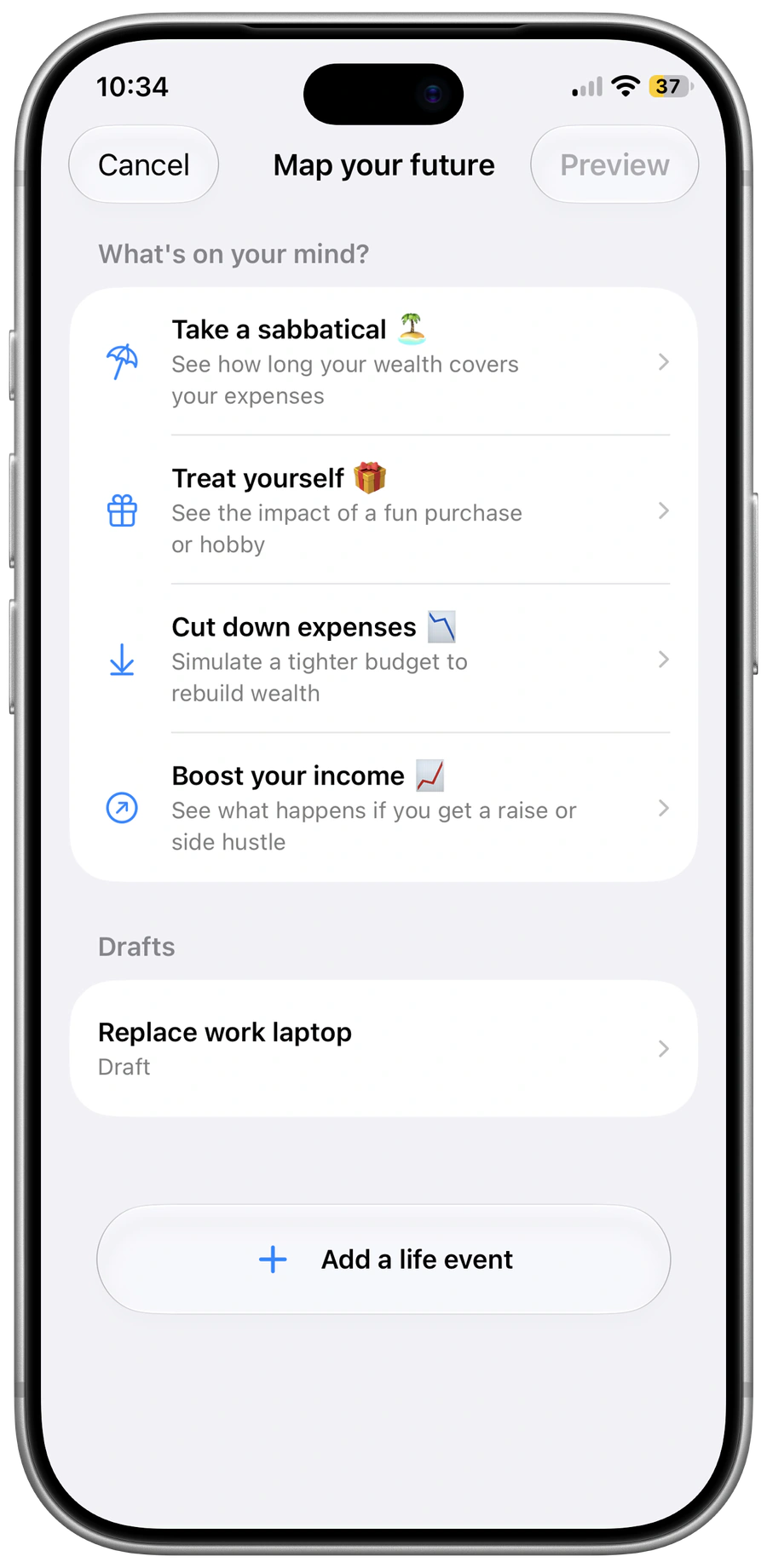
The screen shows where to begin. It does not show a calculated result for a particular break.
Keep the assumptions in view.
Growth and rising prices can change a long-term estimate. Open How far your money can go on home to review them. Use assumptions you want to explore, and see how a lower growth estimate changes the result.
A few useful answers.
What if I do not know when I will return?
Try a few possible dates. A longer pause shows a different possibility; it does not predict when you will find work.
Can I keep using my budgeting app?
Yes. Enter your current amounts in Pace to explore the break. No bank login is needed, and you do not have to move your transaction history.
Does the estimate tell me to leave my job?
No. It shows what your inputs and assumptions could mean. You choose the costs, uncertainty and remaining money you are comfortable with.
Try this with your numbers.
Start free with your current outlook and one saved decision. Pace Pro is a one-time purchase for more exploration. No bank login.