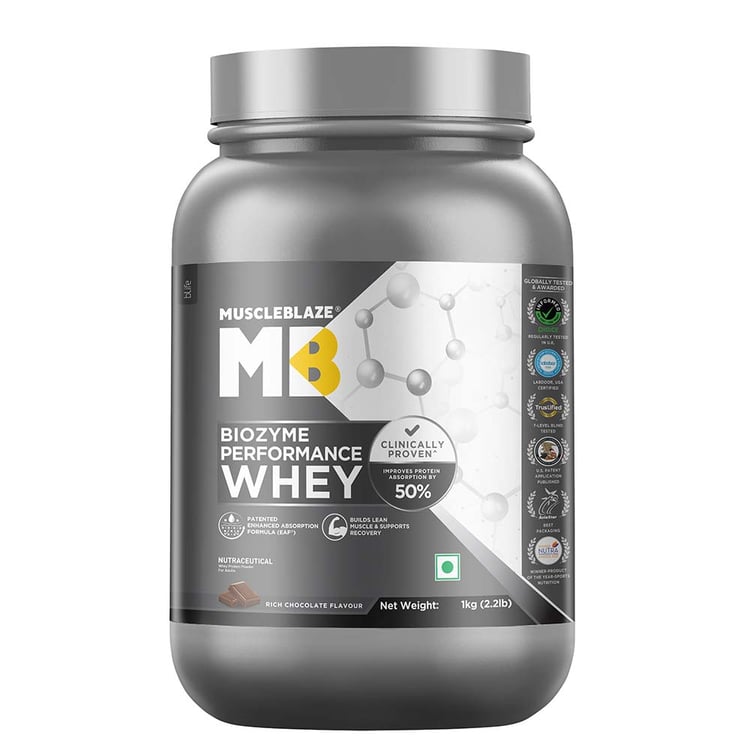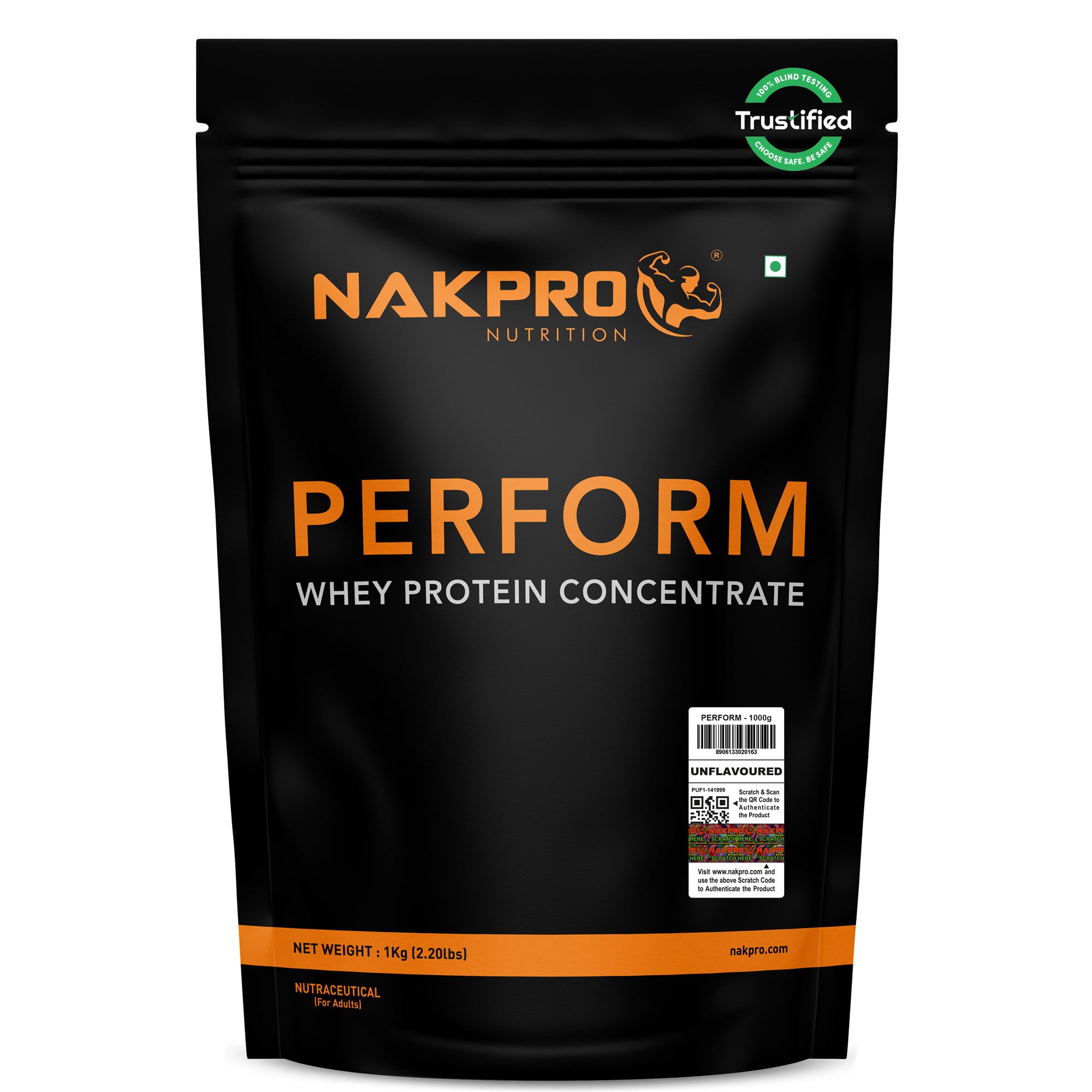
Compare whey protein · India

Compare the numbers, not the claims.

One pack says 24g protein, another says 26g, but their scoops aren't the same size. One has 5 ingredients, another has 15. One costs less per kg but more per scoop of protein. How do you actually compare?

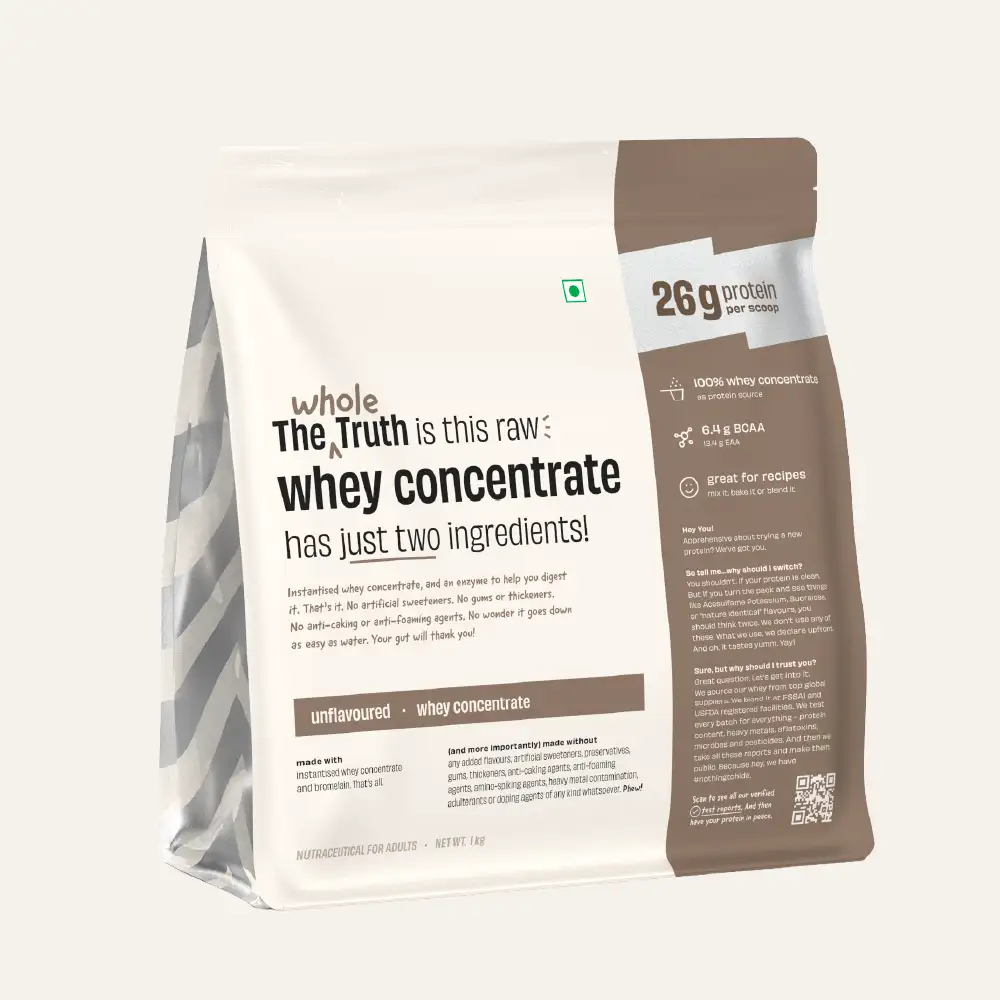
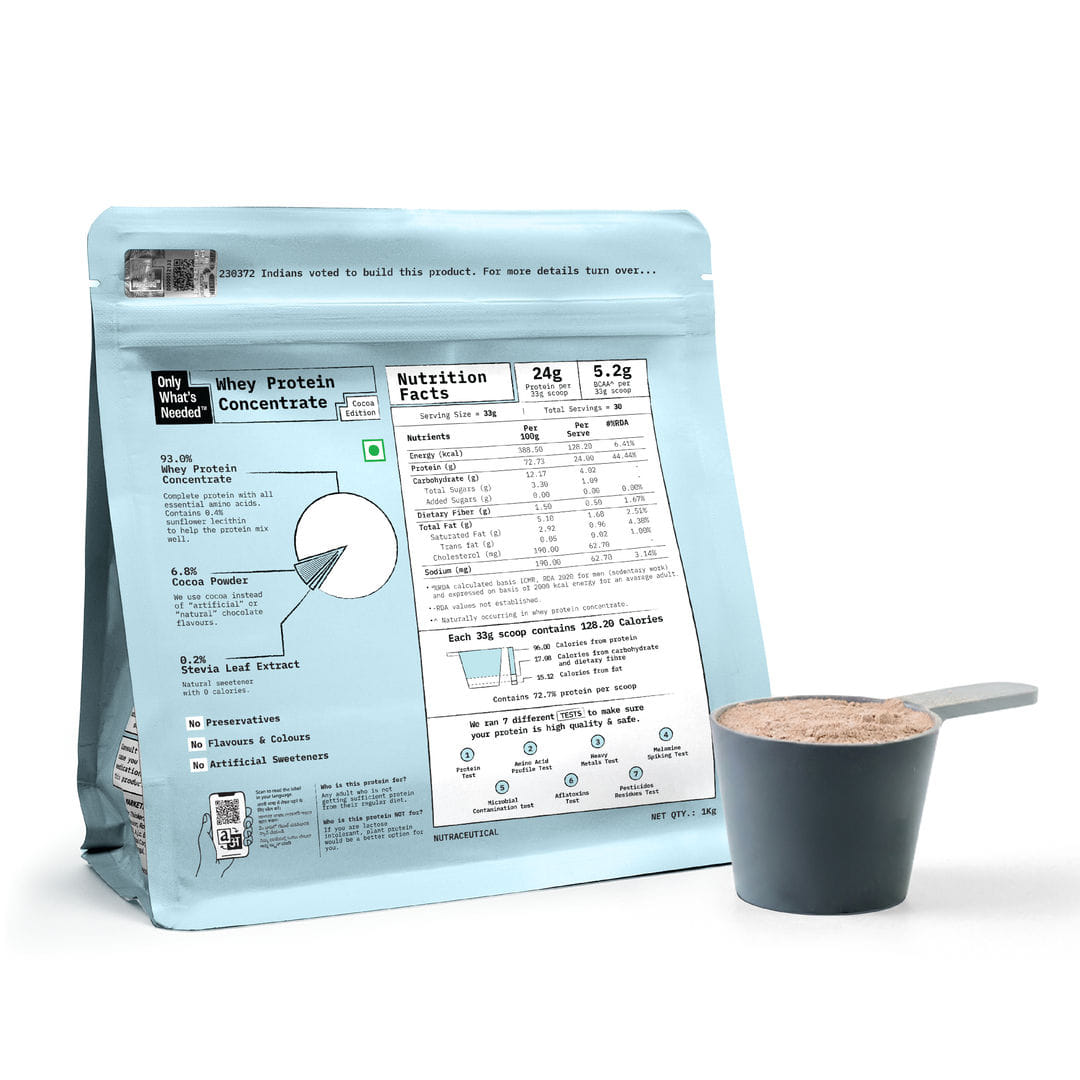
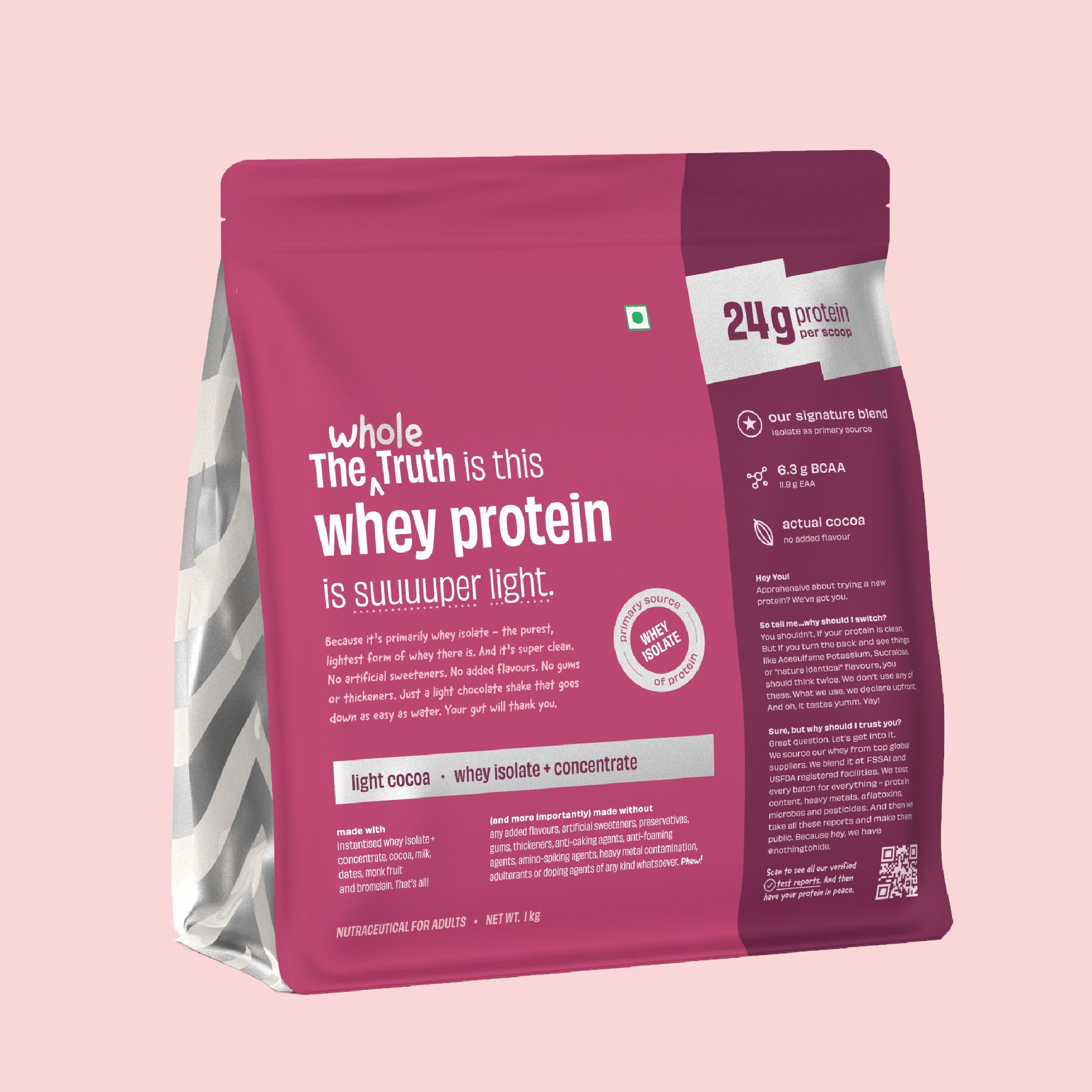
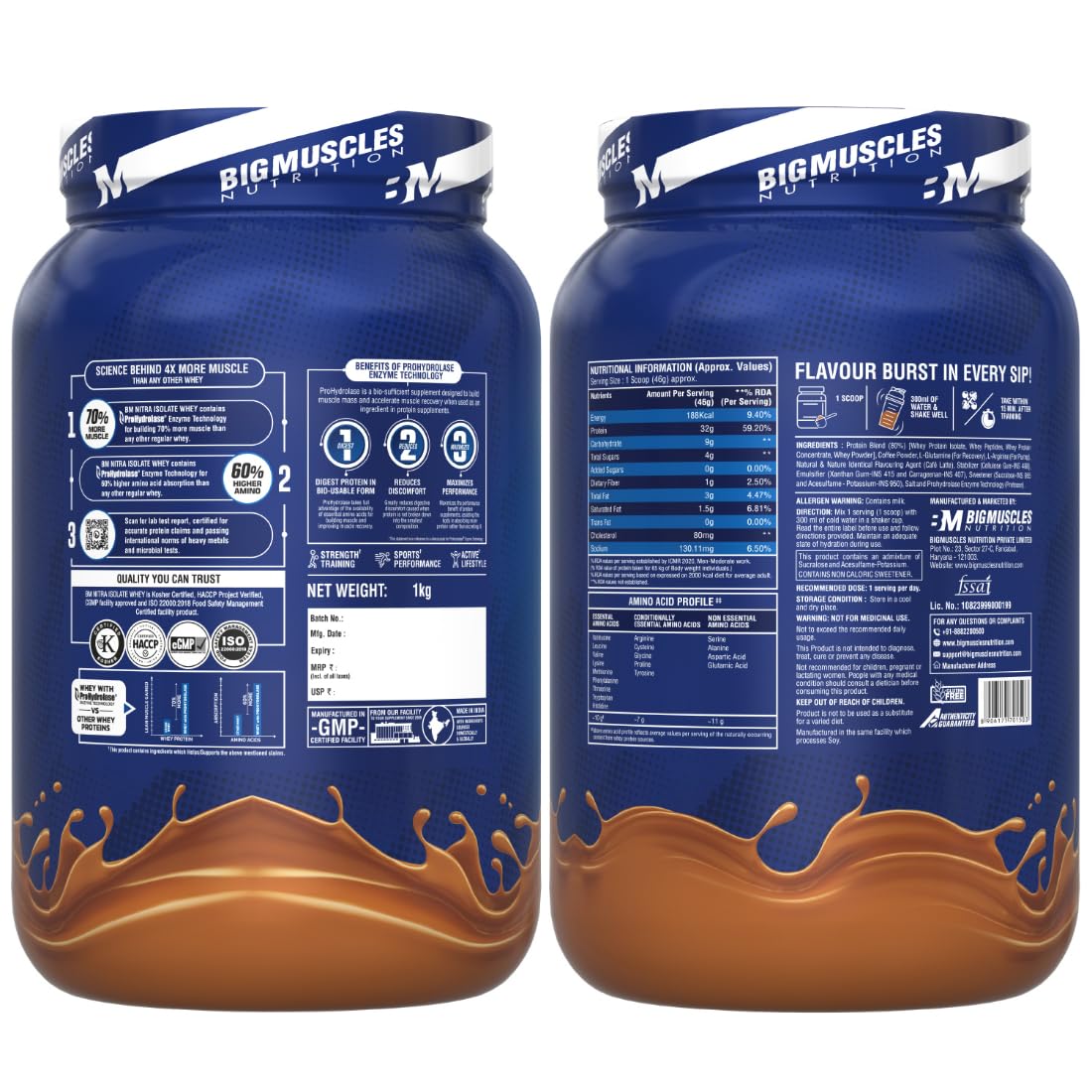
Here, the same facts are shown for every product: protein in the same scoop size, full ingredients, who tested it, and the price for the same amount of protein.

No brand is ranked. No product wins. You pick what matters.

1 kg packs sold in India.

See the shortlist ↓Whey comes from milk. If milk causes an allergic reaction, do not use it.
  1. 01
    What's actually in it?No added flavour

    Unflavoured, or taste from cocoa, coffee, fruit or vanilla.

  2. 02
    How much of the powder is protein?At least 70% protein

    Most of the powder is protein.

  3. 03
    Has anyone outside the brand checked it?Checked outside the brand

    Open a product to see what was checked.

  4. 04
    What does the protein actually cost?Price for 25g protein

    See what the protein costs, not only the powder.

These four filters are a starting point. Remove any of them to see more products.

The shortlist

Start here.

Why start with these four filters?
12 matches
Browse every whey productAll flavours and packs

AS-IT-IS

AS-IT-IS ATOM

AS-IT-IS Nutrition

Avvatar

BeastLife

Bigmuscles Nutrition

Carbamide Forte

FUELONE

Getmymettle

GNC

Isopure

KabiPro

MuscleBlaze

MuscleTech

MYPROTEIN

NAKPRO

NAKPRO NUTRITION

NATURALTEIN

Nutrabay

NUTRELA

Nutrova

Only What's Needed

Optimum Nutrition

OSOAA

PentaSure

QNT

Tata 1mg

The Whole Truth

TrueBasics

Wellbeing Nutrition

Yogabar

Why these four?

Why these four filters?

Each filter answers a question you'd ask in a shop. Here's why each one changes what you see.

What else is in the powder?

Whey can be simple or built for taste and texture.

A product may add something to help mixing, ingredients for taste, sweeteners, thickeners, enzymes or other additions.

More ingredients do not make a whey good or bad. Seeing them makes the choice easier.

Cheaper pack or cheaper protein?

The cheaper pack is not always the lower-cost protein.

Pack price tells you what the tub costs. Price for 25g protein shows what the protein costs.

Ingredients and outside checks stay beside the price, because value is never price alone.

Who actually checked it?

A testing claim helps when you know what it checked.

Who performed the check? Who chose the pack? What did they test? Was it repeated?

The details stay visible instead of turning every check into the same promise.

Same name, different product

Chocolate and unflavoured can change more than taste.

Flavour can change the serving size, protein, ingredients and sweeteners. Pack size can change the price. That is why every flavour and pack stays separate.

Before you choose

Four facts do most of the work.

Everything else is available when you want to look deeper.

  1. 01Protein

    How much protein is in the same 30g powder?

  2. 02Price

    What does 25g of labelled protein cost?

  3. 03Ingredients

    What else is in this flavour?

  4. 04Checks

    What was checked outside the brand?

Whey type

Choose the type for a reason.

The word on the pack matters less than the protein, ingredients, price and how dairy suits you.

Concentrate

Usually a sensible place to start if dairy suits you and price matters.

Isolate

Usually more protein in the same powder and less lactose, but often costs more.

Blend

Look at the final protein, ingredients and price instead of assuming blend is better or worse.

Hydrolysed

A more specialised option for specific needs.

Before you buy

Food may already give you enough protein.

Whey is one convenient way to fill a gap. If there is no gap, you may not need it.

Protein target50g/day45 to 55g from all food
Weight
60 kg
Daily routine
Person
Your simple targetAbout 50 g protein a day

A useful range is roughly 45 to 55 g. This is total protein from the whole day, not whey powder.

Formula used60 kg × 0.83 g/kg/day ≈ 50 g/day

ICMR-NIN adult RDA baseline.

Can food cover this?

Food may already cover this.

If these portions fit your normal day, whey is optional.

Vegetarian dayabout 45 to 55 g
  • 300 ml milk or curd
  • 2 bowls dal, sambar or chana
  • roti, rice, dosa or poha across meals
  • one handful of peanuts, roasted chana, paneer or tofu

Often enough for a basic target if these portions are actually eaten.

Non-veg dayabout 50 to 60 g
  • 300 ml milk or curd
  • 1 bowl dal or chana
  • 2 eggs
  • 75 to 100 g chicken, fish or meat

Usually covers a basic daily target with normal meals.

Sources

Where the facts come from

If it is not known, it stays blank.

Protein and ingredients

From the product label or pack information shown.

Price

From the seller page, with the time last checked.

Outside checks

From the testing logo or claim shown in the product photos.

Not found

Left blank instead of guessed.

See the maths

Protein in 30g powderLabel protein ÷ label serving size × 30

Price for 25g proteinPack price ÷ total labelled protein in the pack × 25

The original label numbers stay on the product page.

Why this exists

I wanted to buy whey and couldn't tell what I was actually getting.

Every pack I looked at used a different scoop size, a different ingredient count, and a different testing claim. I compared them myself, wrote it down, and eventually turned it into this page so anyone buying whey in India can see the same facts next to each other.

Straight answers

Questions people ask before buying whey

Open only what helps your choice.

Start with the basics

What whey is, whether you need it, and who can use it.

What is whey protein? Is it a steroid or artificial powder?

Whey is one of the proteins in milk. It is separated while making foods such as paneer or cheese, then filtered and dried into powder. It is food-derived protein, not a steroid and not a medicine.

SourcesICMR-NIN Dietary Guidelines for Indians

Do I need whey if I already eat normal food?

Maybe not. Your body needs enough protein, not protein powder. If your meals cover your daily protein target, whey is optional. If they leave a gap, whey is one convenient way to fill it.

SourcesICMR-NIN Dietary Guidelines for IndiansBritish Heart Foundation: protein

How much protein do I need in a day?

Start with body weight, daily activity and health. ProteinCompare uses the Indian healthy-adult reference as its baseline and shows a simple range. The number means protein from your whole day, not protein powder alone.

SourcesICMR-NIN Dietary Guidelines for IndiansBritish Heart Foundation: protein

Can women take whey protein?

Yes. Whey is milk protein, and women do not need a separate type of whey. At the same body weight, gender alone does not create a different protein target. Pregnancy, breastfeeding and medical conditions need individual advice.

SourcesBritish Heart Foundation: protein

Can older adults use whey protein?

Yes, if it helps meet a suitable daily protein target. Appetite, activity, medicines and health conditions matter more than age alone. A doctor or dietitian should set the target when illness or a prescribed diet is involved.

SourcesBritish Heart Foundation: protein

Using whey without overthinking it

Timing, rest days, muscle, weight and what to mix it with.

Do I need whey immediately after a workout?

No 30-minute emergency exists. Reaching enough protein across the day matters more. If you train, a protein-rich meal or shake within a few hours can be convenient, but missing an exact minute does not waste the workout.

SourcesNIH: protein and exercise

Should I take protein on rest days?

Your daily protein need does not switch off on rest days. Use whey only if your food still leaves a gap that day. Whey is a food choice, not a workout-day medicine.

SourcesNIH: protein and exercise

Will whey build muscle by itself?

No. Whey gives your body protein. Building muscle also needs resistance training, enough food, recovery and time.

SourcesNIH: protein and exercise

Will whey make me lose weight or gain weight?

Whey does neither by itself. It adds protein and calories. Your overall food and calorie balance decides whether weight goes down, stays steady or goes up.

SourcesBritish Heart Foundation: protein

Should I mix whey with water or milk?

Water adds no extra protein or calories. Milk adds more protein, calories and lactose. Choose the one that fits your food, calorie target, taste and digestion.

SourcesBritish Heart Foundation: protein

Can the body use more than 30g protein at once?

Thirty grams is not a hard absorption limit. The amount that best supports muscle at one meal is a different question from how much your body can digest. Meeting the daily target and spreading protein across meals is a practical approach.

SourcesNIH: protein and exerciseBritish Heart Foundation: protein

If whey does not feel right

Bloating, lactose, bowel changes, acne and hair worries.

Why does whey make me bloated, gassy or give me diarrhoea?

The reason can differ. Lactose, a large serving or another ingredient may be involved. Compare one change at a time instead of changing everything together. Stop using it and seek medical advice if symptoms are severe, keep returning or include swelling or breathing trouble.

SourcesNIDDK: lactose intolerance

I am lactose intolerant. Can I use whey isolate?

Possibly, but isolate is not always lactose-free. It usually has less lactose than concentrate, yet products and personal tolerance differ. Look for a clear lactose-free statement if you need one.

SourcesNIDDK: lactose intolerance

Is lactose intolerance the same as a milk allergy?

No. Lactose intolerance usually causes digestive symptoms such as gas, bloating or diarrhoea. A milk allergy is a reaction to milk protein. Whey isolate is still milk protein and is not a safe workaround for a milk allergy.

SourcesNIDDK: lactose intolerance

Can whey cause constipation?

Many whey powders contain little or no fibre. Constipation can appear when shakes replace fibre-rich food or the whole day has too little fluid and fibre. Check the ingredient list and the full diet, not only the word whey.

SourcesNHS: food, fibre and digestion

Does whey cause acne?

Whey has not been proven to cause acne in everyone. Reports and studies do not all agree, and a 2024 controlled trial did not find worse acne in the whey group. If breakouts repeatedly begin after whey, pause it and discuss the pattern with a dermatologist.

SourcesAmerican Academy of Dermatology: diet and acne2024 controlled trial: whey and acne

Does whey cause hair loss?

Whey is not an established direct cause of hair loss. Hair shedding has many possible causes, including stress, illness, weight loss and low intake of some nutrients. A dermatologist can help find the cause instead of guessing from timing alone.

SourcesAmerican Academy of Dermatology: hair loss

Trust the product, not the marketing

Safety, testing, ingredients, price and choosing between products.

Will whey damage my kidneys or liver?

Do not judge the risk from the word whey alone. Your total protein intake and your health matter. If you have kidney or liver disease, are pregnant or follow a clinician-directed diet, ask your clinician before changing your protein intake.

SourcesBritish Heart Foundation: proteinNIDDK: protein and kidney disease

How do I know the tub is genuine and contains the protein on the label?

Taste, foam and home tests cannot prove protein quantity. Match the flavour and pack, buy from a seller you can trace, use the brand's authentication check, and read what any testing logo actually covers.

How do I know whether a whey has heavy metals?

Look for a report that tested contaminants and clearly names the product, flavour or batch. A protein test or sport banned-substance check may not include heavy metals.

What does third-party tested really mean?

Look for three things: what was checked, who chose the sample and which product or batch it covers. A shop sample chosen by the testing programme gives different confidence from a sample chosen by the brand.

SourcesInformed Choice: how its checks work

Concentrate or isolate: what am I paying extra for?

Isolate is filtered further, so it usually gives more protein and less lactose, carbohydrate and fat in the same powder quantity. It does not build more muscle just because it is isolate. Pay extra only when those differences help you.

SourcesICMR-NIN Dietary Guidelines for Indians

Does bad taste, foam or poor mixing mean the whey is fake?

No. Flavour, foam and mixing can change with the protein type, ingredients and preparation. They affect whether you enjoy using the product, but they do not prove protein quantity or authenticity.

Whey, plant protein or casein: which is better?

There is no winner for everyone. Whey is a complete milk protein, plant protein suits people avoiding dairy, and casein digests more slowly. Choose around your diet, digestion, ingredients, protein quantity and price.

SourcesNIH: protein and exercise

Why is one whey much more expensive when both show 24g protein?

The price can include protein density, whey type, flavouring, imported ingredients, pack size, testing, seller margin and branding. Compare the price for the same 25g protein, then decide whether the other differences are worth paying for.

Which whey brand is best?

No brand is best for everyone. Compare the protein, ingredients, testing and price of the flavour you will actually buy.

Outside checks

One check does not answer every question.

See what was checked and who chose the tested pack.

What does each testing logo tell me?

Each programme checks something different. We name the useful result beside the logo: sport banned substances, protein amount or contaminants.

Who chose the sample?

Some programmes buy the product from a shop. Sometimes the brand chooses the sample and sends it to a lab. We keep these apart so you know what each result can tell you.

Does one test cover everything?

No. A protein check does not also prove heavy-metal or sport results. A sport banned-substance check does not confirm every nutrition number.

Where do the testing claims come from?

From the testing logo or claim shown in the product photos. ProteinCompare does not run or confirm the test.

Why show the flavour and pack?

Flavours and pack sizes can have different ingredients, nutrition and testing marks. The page follows the product shown, not the brand name alone.

Want to try different filters?

Change any filter and compare again. The shortlist updates instantly.

Back to the shortlist